


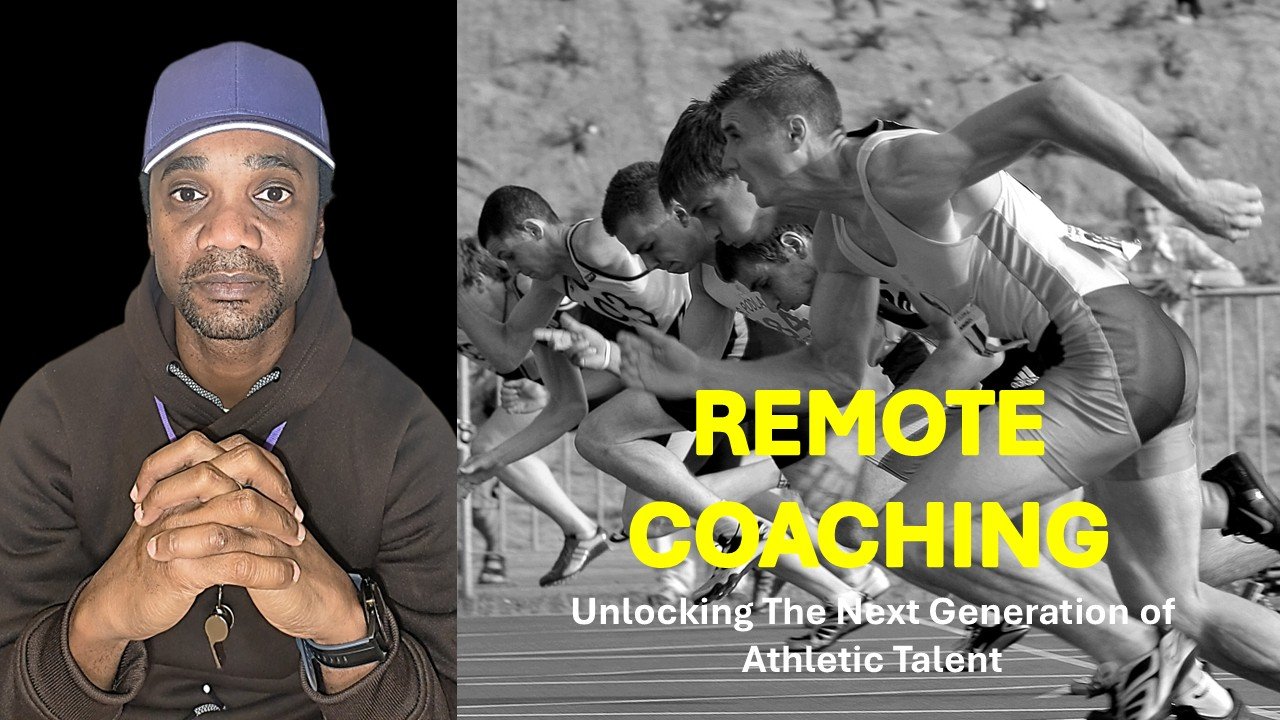
Chioma is fast.
She wins school races comfortably. Teachers mention her name whenever athletics comes up. People say, “If only she had the right coach…”
That’s the problem.
Chioma doesn’t live near a recognised training centre. There’s no sprint specialist nearby. No academy within reach. Her training consists of borrowed advice, online clips, and instinct. She’s doing her best, but she’s largely on her own.
She isn’t lacking talent. She’s lacking access.
And Chioma is not alone.
As the founder of TWO XP, stories like this — real and imagined — sit at the back of my mind whenever I think about the future of sport. They lead me to a question that feels increasingly relevant:
Could remote coaching eventually take over from traditional, in-person coaching?
It’s a compelling idea. But it deserves an honest exploration.
Remote coaching exists because it solves a real problem.
Many athletes, especially at grassroots level, are limited not by effort or ability, but by geography. They don’t live near elite coaches. They aren’t part of well-funded systems. Some don’t even know what good coaching should look like. Remote coaching challenges that by:
– Connecting athletes to expertise beyond location
– Providing consistent feedback through video and communication tools
– Supporting development earlier rather than later
– Widening the talent pool that gets meaningful guidance
For athletes like Chioma, remote coaching isn’t a convenience — it’s a doorway. It doesn’t replace hard work. It replaces isolation.
That said, sport is not purely technical. It’s deeply human. There are elements of coaching that are difficult to replicate remotely:
-Hands-on physical correction
-Real-time emotional feedback
-Presence during pressure-filled moments
-The shared energy of training environments
A coach on the ground can read body language, adjust instantly, and respond intuitively. For many athletes, particularly as they progress, that physical presence remains invaluable. Pretending otherwise would ignore the lived reality of coaching.
The real danger is presenting this as an either-or scenario. That framing misses the point.
The future of athlete development is far more likely to be hybrid. Remote coaching extends reach, continuity, and access. Traditional coaching anchors trust, environment, and physical presence.
When the two work together, athletes benefit most.
Instead of asking whether remote coaching will replace traditional coaching, perhaps we should be asking:
How can remote coaching strengthen traditional coaching — and make it more accessible?
How can it:
-Support athletes between in-person sessions
-Maintain guidance through transitions and disruptions
-Reduce reliance on chance discovery
-Ensure talent like Chioma’s isn’t lost simply because of location
These are the questions worth exploring.
At TWO XP, we don’t see remote coaching as a replacement. We see it as an extension of care.
Our aim is to build a platform where:
-Remote coaching feels seamless rather than fragmented
-Athletes remain connected to guidance wherever they train
-Learning, feedback, and progress live in one place
-Coaches can mentor beyond geography without losing quality
TWO XP is a platform that respects the craft of traditional coaching while acknowledging the realities of access in modern sport.
I don’t believe traditional coaching is disappearing. And I don’t believe remote coaching should stand alone. But I do believe the athletes of the future will expect support to move with them — not stay fixed in one location. If remote coaching is going to play a larger role, it needs to be done thoughtfully, ethically, and with athletes at the centre. That’s the possibility I’m considering.
And it’s the direction I hope TWO XP can help lead — not by replacing what already works, but by making guidance reach further than it ever has before.
Join The Conversation!
Comments